
How to Choose Preschool Sensory Furniture for Your School?

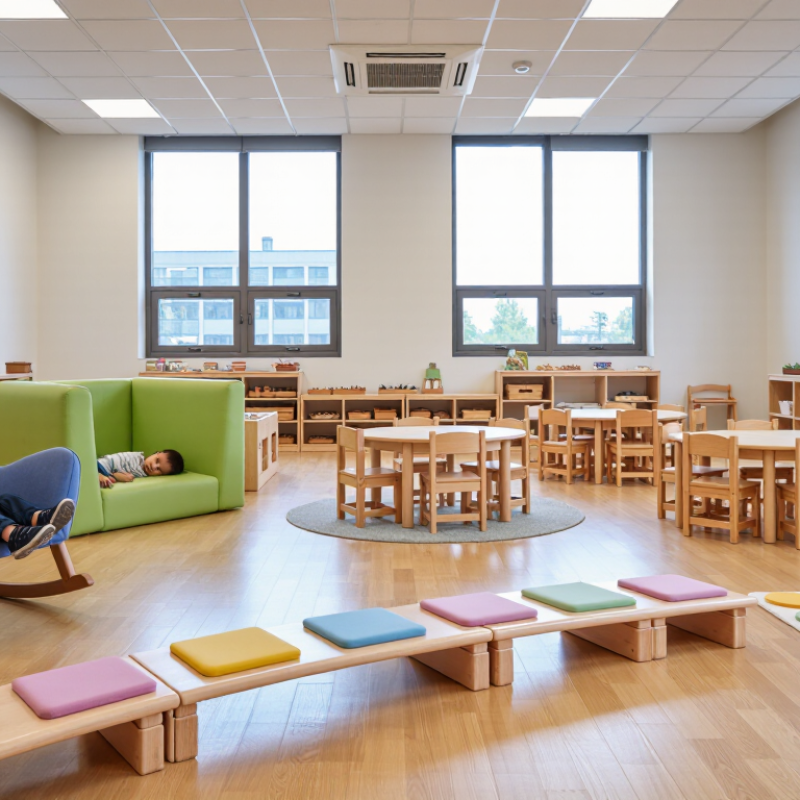
Choosing Preschool Sensory Furniture is not simply a matter of adding bright colors or soft cushions. The right pieces can help children settle, move, and explore within a thoughtfully arranged classroom. Yet no single product suits every child. Needs differ, and a busy room can quickly become overwhelming.

Occupational therapist and sensory-integration researcher A. Jean Ayres described sensory integration as “the organization of sensation for use.” Her idea offers a useful lens for furniture choices: consider how a child will use each piece, not just how it looks. A rocking seat may support gentle movement; a low, padded nook may offer a quieter place to pause. Small details matter.

Look closely at stability, cleanable surfaces, rounded edges, and age-appropriate dimensions. Check whether staff can move or rearrange pieces without blocking walkways or sightlines. Ask how materials hold up after repeated wiping, climbing, and daily classroom use. A catalog photo cannot answer everything.

Observe the room at different times of day. Where do children gather? Where do they retreat? The answer may surprise you. Sensory furniture should support participation, not isolate a child or promise a clinical result. It also needs to work for children with different bodies, preferences, and ways of communicating.

Some choices will need reconsideration. That is normal. This guide explores practical ways to compare Preschool Sensory Furniture, assess classroom fit, and make decisions grounded in observation, usability, and care.
How to Choose Preschool Sensory Furniture for Your School?

Identify the Sensory Needs of Preschool Children

How to Choose Preschool Sensory Furniture for Your School?

Identify the Sensory Needs of Preschool Children

Preschool children experience sound, movement, touch, and light differently. Watch how each child uses the room during ordinary activities. Does a chair scrape cause distress? Does a child seek rocking, firm pressure, or a quiet place after group play? Small patterns matter. A child who avoids messy materials may still enjoy textured cushions. Sensory preferences can change with fatigue, noise, or routine. Avoid treating one observation as a diagnosis.

Furniture should respond to real needs, not just look calming. Offer stable seating, a clear path, and a low-stimulation retreat where children can pause without being isolated. Include varied textures carefully, and check that surfaces are easy to clean and appropriate for preschool use. A soft corner can help, but it may become crowded or distracting. Review how children use it, and adjust the layout when it is not working.

Assess Classroom Space and Furniture Placement

Before choosing preschool sensory furniture, draw the classroom to scale and mark doors, windows, sinks, and fixed storage. Measure the usable floor area, not just the room’s outside dimensions. A low climbing unit may fit beside a wall but block a doorway when children gather around it. Leave clear routes between activity areas, and check that teachers can see children behind shelves or cozy seating. Small details matter. A room can look orderly on paper and still feel crowded during arrival.

The U.S. Head Start Program Performance Standards set a benchmark of at least 35 square feet of usable indoor space per child in center-based programs. This figure excludes areas such as bathrooms and hallways; local requirements may differ. For 18 children, that benchmark means 630 square feet of usable space before furniture placement. Sensory equipment takes up real floor area, so sketch its footprint and include room for children to approach and move away safely. Keep quieter items away from busy entry points, and avoid placing soft seating where it hides sightlines. I sometimes underestimate how much space a group needs to use one item comfortably. Test the layout with chairs, tape, or cardboard outlines, then adjust it after observing how children actually move through the room.

Compare Sensory Features, Materials, and Design

Compare sensory features in use, not just on a catalogue page. A small tent can offer visual calm, while a low rocking seat provides gentle movement. Keep both visible to staff and easy to leave; a cosy corner should not become an isolated corner. The CDC’s 2025 autism surveillance report identified autism in about 1 in 31 eight-year-old children across its monitored U.S. communities. That figure does not measure sensory needs, but it underlines why one setup may not suit every child. Small details matter.

Check materials for wipe-clean surfaces, secure seams, stable bases, and clear care instructions. Choose textures children can explore without rough edges or loose parts, and verify that cushioning holds its shape after repeated use. The American Academy of Pediatrics’ clinical report on sensory integration therapies notes limited evidence for many sensory-based approaches. Treat furniture as a practical support, not a guaranteed intervention: observe whether children settle, move safely, and return to activities. Test before buying. Ask educators and children what feels comfortable, then review the choice after real classroom use. Comfort is subjective, and a feature that looks calming may still feel too exposed. That is worth admitting.

How to Choose Preschool Sensory Furniture for Your School? — Compare Sensory Features, Materials, and Design

Furniture Type Sensory Features Common Materials Design and Best Fit Care and Safety Considerations What to Compare Before Buying
Rocking Chair Provides gentle, rhythmic movement that may help some children seek vestibular input or settle during quiet activities. Wood or molded plastic frames; padded seats may use foam with fabric or wipeable upholstery. Useful in a supervised reading or calm-down area. Choose a size that allows the child to sit with feet supported where possible. Check that the chair is stable, has smooth edges, and rocks without trapping fingers. Follow the maker’s age and weight guidance; supervise use. Compare rocking range, base stability, seat dimensions, surface cleanability, and whether the movement suits the intended space.
Wobble Stool Allows small, self-directed movements while seated; movement can support active sitting for some children. Typically a molded plastic seat with a rubber or other non-slip base. Can be used at a child-sized table or in a flexible learning area. It is not a substitute for a stable chair when a task requires stillness. Use on a level, non-slip floor. Check the base and seat regularly for wear, cracks, or loose parts, and observe whether the child can use it safely. Compare seat height, base grip, permitted user weight, ease of cleaning, and how much movement the stool allows.
Floor Cushion or Beanbag Offers a soft, low seating option and a change in body position; some designs provide a snug, enveloping feel. Fabric covers with foam or bead filling; many covers are removable, though construction varies. Works for supervised reading, floor play, or a quiet corner. A firmer cushion may be easier for children to get on and off independently. Choose durable, securely closed covers and follow cleaning instructions. Keep loose filling inaccessible, and check the product’s age guidance and condition regularly. Compare firmness, cover removability, seam and closure strength, fill type, size, and suitability for the classroom’s cleaning routine.
Foam Floor Seating Provides a cushioned surface for floor-based activities and varied postures; it does not necessarily provide active movement. Foam cores with fabric or wipe-clean coated covers, depending on the product. Useful for group story time, play spaces, and low-level activity zones. Modular pieces can make layouts easier to change. Use intact covers and inspect seams and foam for damage. Follow the manufacturer’s cleaning guidance; keep seating clear of exits and walkways. Compare firmness, cover material, removable-cover options, dimensions, modularity, and how easily pieces can be stored.
Tactile Activity Panel Offers varied touch experiences through different textures or movable elements; sensory response can differ from child to child. May combine wood or plastic panels with securely attached fabric, textured surfaces, or other tactile components. Can be wall-mounted or incorporated into a low activity unit. Place it where children can explore without blocking circulation. Securely mount wall units as instructed. Inspect for loose parts, sharp edges, and damage; choose features that can be cleaned appropriately. Compare texture variety, durability, attachment security, mounting requirements, accessible height, and cleaning needs.
Child-Sized Activity Table Supports tactile, visual, and fine-motor activities when paired with suitable materials; the table itself does not provide a specific sensory input. Common options include solid wood, engineered wood, or molded plastic, with different edge and surface finishes. Suitable for art, construction, sensory bins, and small-group work. Match table height to the children and the seating used. Look for a stable base, smooth edges, and a surface suitable for the planned activities. Secure the table and keep heavy items from creating a tipping risk. Compare height, usable surface area, legroom, stability, resistance to routine cleaning, and compatibility with classroom chairs.

Check Safety, Accessibility, and Durability

How to Choose Preschool Sensory Furniture for Your School?

A quiet corner should calm children, not create new hazards. Check for stable bases, rounded edges, secure seams, and materials that clean easily. Press gently on stools and rocking seats; wobble is a warning. Ask suppliers for age and weight limits, cleaning instructions, and evidence that products meet relevant safety standards. CPSC’s Public Playground Safety Handbook focuses on playgrounds, not classroom furniture, but its attention to impact areas and fall risks is a useful reminder: inspect the whole setup, not just one chair.

Accessibility needs the same close look. Can a child using mobility equipment reach the sensory tools? Keep pathways clear and place frequently used items within children’s reach. The 2010 ADA Standards describe a 36-inch minimum accessible route and a 60-inch turning space in applicable settings; use these as planning references, while checking requirements for your own space. WHO and UNICEF’s 2022 Global Report on Assistive Technology estimates that 2.5 billion people need at least one assistive product. Children’s needs vary, so one “inclusive” seat will not suit everyone. That is easy to overlook.

Plan the Budget, Trial, and Ongoing Maintenance

Budget for preschool sensory furniture in phases: core seating, movement pieces, then replacement stock. A low purchase price can hide costs for washable covers, spare parts, and staff time. In a 2015 study published in Building and Environment, Barrett and colleagues found classroom design factors explained 16% of variation in primary pupils’ academic progress. That is not a preschool furniture guarantee, but it supports treating layout and function as part of the learning environment, not decoration. Keep a small contingency for repairs; I would not spend every dollar on the initial order.

Trial furniture in the actual room before committing. Set out one sample of each type, then observe whether children can reach, move, and use it without blocking walkways. Ask educators to record daily use, cleaning time, and signs of discomfort for two weeks. The trial may expose a mismatch. A rocking seat that looks useful in a catalog might distract children near a quiet corner.

Make maintenance part of the purchase plan. Check seams, fasteners, non-slip feet, and cleaning instructions during routine inspections, and log damage before items return to use. Choose materials that tolerate the school’s approved cleaning products, not merely those that look easy to wipe. The U.S. Consumer Product Safety Commission’s product-safety guidance emphasizes following manufacturers’ warnings and care instructions; keep those documents with the inventory. Some checks will be missed on busy days, so assign ownership and set a simple calendar reminder.

How to Choose Preschool Sensory Furniture for Your School?

Plan the budget, trial products before committing, and set aside funds for ongoing maintenance.

This illustrative planning model divides a first-year budget among furniture, delivery and setup, trial and evaluation, maintenance, and contingency. Adjust the shares to match your school’s quotes, needs, and purchasing plan; they are not market-price data.