
Choosing High Quality Kitchen Cabinets means looking beyond price and door style. The cabinets should suit daily routines, available space, and the way your household stores food, cookware, and dishes. Open a drawer. Does it glide smoothly when loaded, or wobble at the sides? Check door alignment, edge finishes, and how the cabinet boxes are joined. Small details can reveal more than a polished showroom display.
Materials matter, but labels alone do not tell the whole story. Compare cabinet construction, hardware, finish durability, and the installer’s workmanship. Ask what the box, doors, and drawer sides are made from, and request written details about warranties and care. Bring home a door sample if possible; a color that looks warm under store lighting may appear quite different beside your counters. A practical review also considers measurements, appliance clearances, and access to plumbing or electrical connections. These checks can help prevent costly surprises, though they cannot guarantee a perfect installation.
There is no single best cabinet for every kitchen. Solid wood, plywood, and engineered panels each have trade-offs in cost, appearance, and upkeep. Be cautious of vague claims, and compare specific construction details rather than relying on labels such as “premium.” Even careful shoppers can miss something. I would revisit the choices after seeing the sample at home, especially if the finish or layout still feels uncertain. A little doubt is useful; it encourages better questions before you commit.
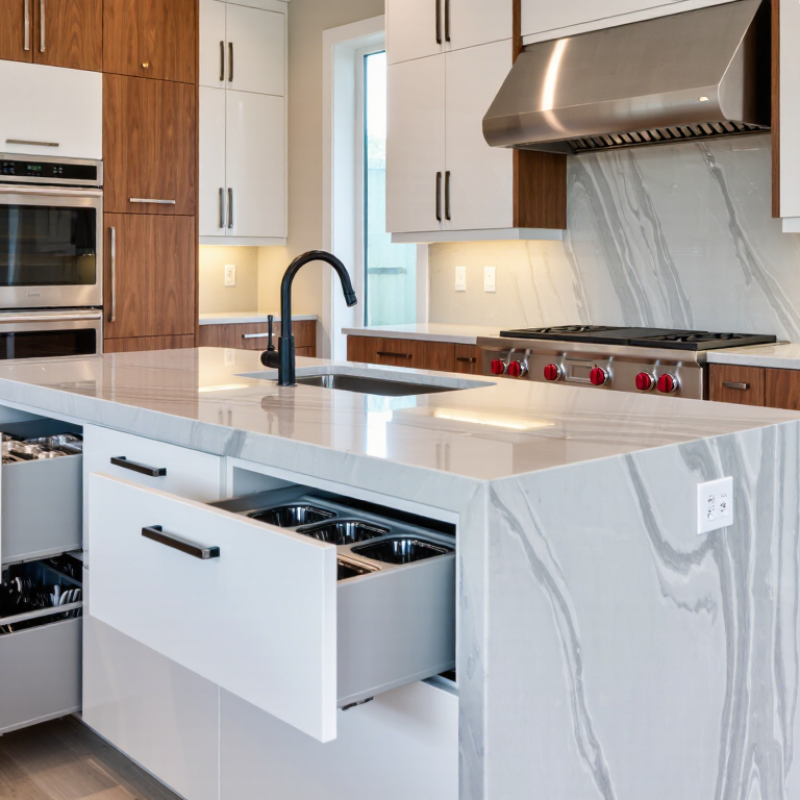
How to Choose High Quality Kitchen Cabinets?
Assess Your Kitchen Needs, Layout, and Storage Requirements
Start with the way your kitchen works, not a cabinet style. Track what you use daily, from the coffee mugs beside the kettle to the pans near the stove. Measure wall lengths, ceiling height, door swings, and appliance clearances before comparing cabinet options. A beautiful layout can still frustrate you if a dishwasher blocks a drawer.
Houzz’s 2024 U.S. Kitchen Trends Study reports that 76% of renovating homeowners replaced all their kitchen cabinets. That major investment makes a careful needs assessment worthwhile. List bulky appliances, pantry goods, and recycling bins, then assign each a practical home. Deep drawers can make heavy pots easier to reach, while narrow pullouts may use awkward gaps. Check traffic paths, too: two people should be able to work without colliding at the sink. Small details matter. I would still question any plan that looks perfect on paper but ignores how your household actually cooks.
Tips: Measure twice, and mark appliance doors on the floor with painter’s tape. Group items by task before choosing shelves or drawers. Keep frequently used dishes within easy reach, and test corner access in person. These checks may feel fussy. They can prevent daily annoyances.
| Assessment Area | What to Measure or Consider | Practical Planning Guidance | Cabinet Quality Check |
|---|---|---|---|
| Household cooking needs | Number of regular cooks, meal routines, cookware, small appliances, and pantry goods. | List frequently used items first. Reserve convenient storage near the sink, cooktop, and main food-preparation area. | Check that drawers and doors open smoothly and that storage suits the weight and size of intended contents. |
| Kitchen measurements | Wall lengths, ceiling height, window and door locations, and positions of plumbing, outlets, and vents. | Measure each wall in more than one place; note obstructions and confirm appliance dimensions before selecting cabinet widths. | Verify the plan accounts for fillers, finished end panels, trim, and appliance clearances rather than relying on nominal cabinet widths alone. |
| Layout and circulation | Aisle width, door swings, appliance openings, and movement between the sink, cooking area, and refrigerator. | A 36-inch walkway is a common minimum; work aisles are often planned at about 42 inches for one cook and 48 inches for multiple cooks. | Use a scaled plan to confirm drawers, pull-outs, and appliance doors can open without blocking essential routes. |
| Base cabinet fit | Counter height, worktop depth, plumbing access, and the location of heavy or frequently used items. | A common base cabinet is about 24 inches deep and 34.5 inches high before the countertop; finished counter height is often about 36 inches. | Inspect cabinet-box construction, secure joints, level installation, and drawer hardware appropriate for expected loads. |
| Upper cabinet placement | Ceiling height, reach, lighting, range-hood requirements, and the clearance above the countertop. | Upper cabinets are commonly about 12 inches deep. A clearance of roughly 18 inches above the countertop is common, subject to appliance and local requirements. | Check that cabinets are securely anchored and that doors do not interfere with windows, lights, or ventilation equipment. |
| Drawer and pull-out storage | Cutlery, plates, pots, pans, food containers, and cleaning supplies. | Use shallow drawers for utensils and deeper drawers or pull-outs for cookware; plan waste and recycling storage near the sink or preparation area. | Test full-extension movement, soft-close action if included, drawer stability, and access to removable organizers. |
| Corner and vertical space | Corner cabinet access, ceiling gaps, tall appliances, and items used only occasionally. | Compare corner pull-outs, swing-out shelves, or a straightforward shelf arrangement; use higher storage for lighter, less-used items. | Confirm moving corner hardware operates without binding and can be reached, cleaned, and maintained. |
| Materials and finish | Moisture exposure, cleaning habits, sunlight, expected wear, and preferred appearance. | Choose a finish suited to the kitchen environment and request material and care information for cabinet boxes, doors, and exposed edges. | Look for even finishes, sealed edges, aligned doors, consistent gaps, and clear written information about materials and maintenance. |
| Final plan review | Cabinet schedule, appliance specifications, storage list, installation details, and budget priorities. | Review the layout with appliance models and door swings shown; prioritize durable construction and useful storage over features that will rarely be used. | Request itemized specifications, installation scope, care instructions, and applicable warranty terms before approving the order. |



© 2025 Acadia Craft. Powered by Integrity Marketing Serving Woodinville, Kirkland, Bellevue & The Greater Seattle Area